Colostrum & the evidence A closer look
Curious about colostrum. Skeptical of another promise.
You’ve seen the recommendations. Now you want to know what sits behind them. Follow the questions from the first milk to the research—and finally to the scoop.

Sometimes the more recommendations you see, the harder it becomes to decide what you believe.
A powder appears in a morning routine. A headline gives it a big job. Someone else calls it the one thing you have been missing. But the questions that matter to you may still be unanswered.
What is it? What did the studies actually test? Is the serving in this tub the same? And why should this become the next thing on your shelf?
When every answer sounds like a sales pitch
“I just get sales pitches.”
That is how one participant in a public gut-health discussion described the search for information. The same discussion mentions a diagnosed condition and professional care, so it should not be treated as a description of every colostrum shopper.
Still, the distinction it raises is useful. A recommendation can tell you what to buy without explaining what you need to know. A persuasive account can create confidence faster than it creates understanding.
This article is published by IYRA. There is a product at the end of it. Before we get there, the ingredient and the research deserve a closer look.
Start with what colostrum actually is
Colostrum is the first milk mammals produce after birth. Bovine colostrum comes from cows. It contains proteins, including immunoglobulins, and is sold in different preparations and supplement formats.2
Its origin makes an interesting introduction. It does not, by itself, establish what a daily supplement does for an adult. Nor does an ingredient’s biological role tell us whether a particular amount in a finished blend produces the outcome a shopper wants.
Bovine origin also matters to the decision. If you avoid animal-derived products, that is a product-fit question before any discussion of research. Claims about sourcing should be checked against specific supplier documentation, not inferred from a reassuring photograph.
The research is more specific than the promises
A familiar ingredient name can make studies look as though they all test the same thing. Read more closely and the preparations, doses, participants and outcomes may be very different.
The result is a reason to look at the research question. It is not a shortcut from “permeability marker” to “comfortable after dinner.” Those are different outcomes, and the study amount differs from the colostrum amount in IYRA’s serving.
Be careful with a story about “repair”
Online conversations often connect bloating to the phrase “leaky gut.” The phrase can seem to supply an explanation and a shopping list at the same time. But nonspecific symptoms cannot diagnose a gut-barrier problem.
A gastroenterology review distinguishes research on intestinal barrier function from the popularized “leaky gut syndrome” label. It describes that label as lacking a formally accepted diagnosis and a validated diagnostic test.4
You can be interested in an ingredient without adopting every story told about it. Keeping that separation makes it easier to compare what is known, what is uncertain and what is simply being suggested.
Finally, the scoop itself
Here is IYRA’s product information. The formula combines bovine colostrum, bovine lactoferrin and marshmallow root powder. The serving amounts below are label details, not a claim that this blend has been clinically proven to relieve bloating or repair the gut.
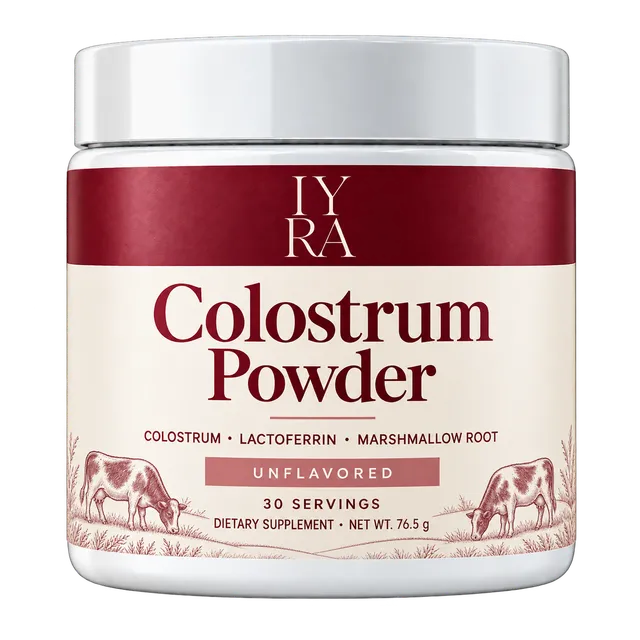 The label, by the scoop
Meet IYRA Colostrum
- Bovine colostrum
- 2,000 mgIncludes 400 mg IgG
- Bovine lactoferrin
- 50 mg
- Marshmallow root powder
- 500 mg
Per 2.55 g scoop · 30 servings · 76.5 g tub
Unflavored · Contains milk
See ingredients, directions, current offers and purchase terms.
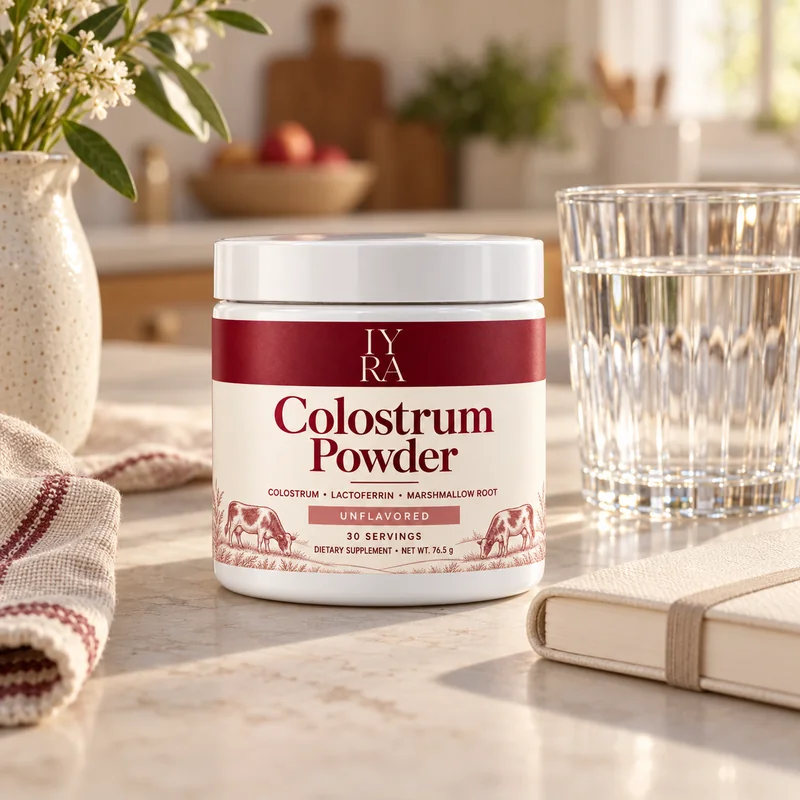
The listed IgG is included within the colostrum amount. Each tub contains 30 servings. Follow the package instructions, check the milk allergen and review suitability before use. Unflavored does not promise a particular taste or mixing experience.
You don’t have to leave your skepticism here
Take it with you to the product page. Compare the ingredients. Read individual customer experiences as individual experiences. Check the current offers, shipping, subscription and return terms.
If you are pregnant or nursing, take medication or manage a health condition, ask a qualified healthcare professional before use. Do not use this product if you have a milk allergy.
Curiosity is a reason to learn more. Buying is a separate decision. IYRA’s details are there for you to inspect before you make it.
Does it belong in your routine?
Go beyond the recommendation. Compare the research with the details on the label.
Explore IYRA ColostrumContains milk. Do not use if you have a milk allergy.
Sources & further reading
Ingredient research does not establish an effect of the finished IYRA blend. Public discussions describe individual experiences.
- Gut Health — I’m overwhelmed · public discussion, r/TwoXChromosomes
One person’s shopping frustration, in a discussion that also mentions celiac disease and professional care. Customer language, not evidence of IYRA outcomes or a representative audience.
- Effect of Colostrum on the Symptoms and Mucosal Permeability in Patients with Irritable Bowel Syndrome: A Randomized Placebo-controlled Study
A small randomized, placebo-controlled study enrolled 18 adults with IBS. Participants received 15 mL per day for 4 weeks, followed by 4 weeks of observation. Between-group differences in symptoms, quality of life and endotoxin did not reach statistical significance.
- The nutriceutical bovine colostrum truncates the increase in gut permeability caused by heavy exercise in athletes
A 12-person, double-blind crossover study tested 20 g/day of bovine colostrum for 14 days before a standardized strenuous exercise challenge. Researchers measured an exercise-related urine permeability marker. The study did not measure meal-related bloating or test IYRA’s 2 g colostrum serving.
- Leaky Gut Syndrome: Myths and Management
A 2024 gastroenterology review distinguishes regulated intestinal barrier function from the popularized “leaky gut syndrome” label. It says the label is not a formal accepted diagnosis, symptoms are nonspecific, and no validated test diagnoses the syndrome.
- Symptoms & Causes of Gas in the Digestive Tract
The National Institute of Diabetes and Digestive and Kidney Diseases describes gas and bloating as variable; they can be normal around meals. Factors include swallowed air, carbohydrate fermentation and health conditions. The agency advises talking with a doctor about bothersome, sudden or accompanied symptoms.