Bloating After Meals: What the Label Can Tell You
See what can cause bloating, what colostrum studies measured, and what one IYRA scoop contains.

Fullness after a meal? Start with the facts
Fullness or swelling after a meal can affect plans and what feels comfortable to wear. Bloating can distract from an afternoon and shape choices around clothing or plans. Naming the symptom gives you a place to start.
Describe the sensation before guessing at a cause. Bloating has several possible explanations; one meal or feeling cannot identify which applies. When comparing digestive supplements, review the ingredient list, amount per serving and package directions.
Choose one question at a time: whether to add a supplement, which label details matter and how a powder would fit your day. Start with ingredients, serving size and preparation directions; compare the format with your routine.
Compare the product details
Powders, capsules and “gut support” blends can share familiar terms. Compare the amount per scoop, ingredient form, flavor and package directions.
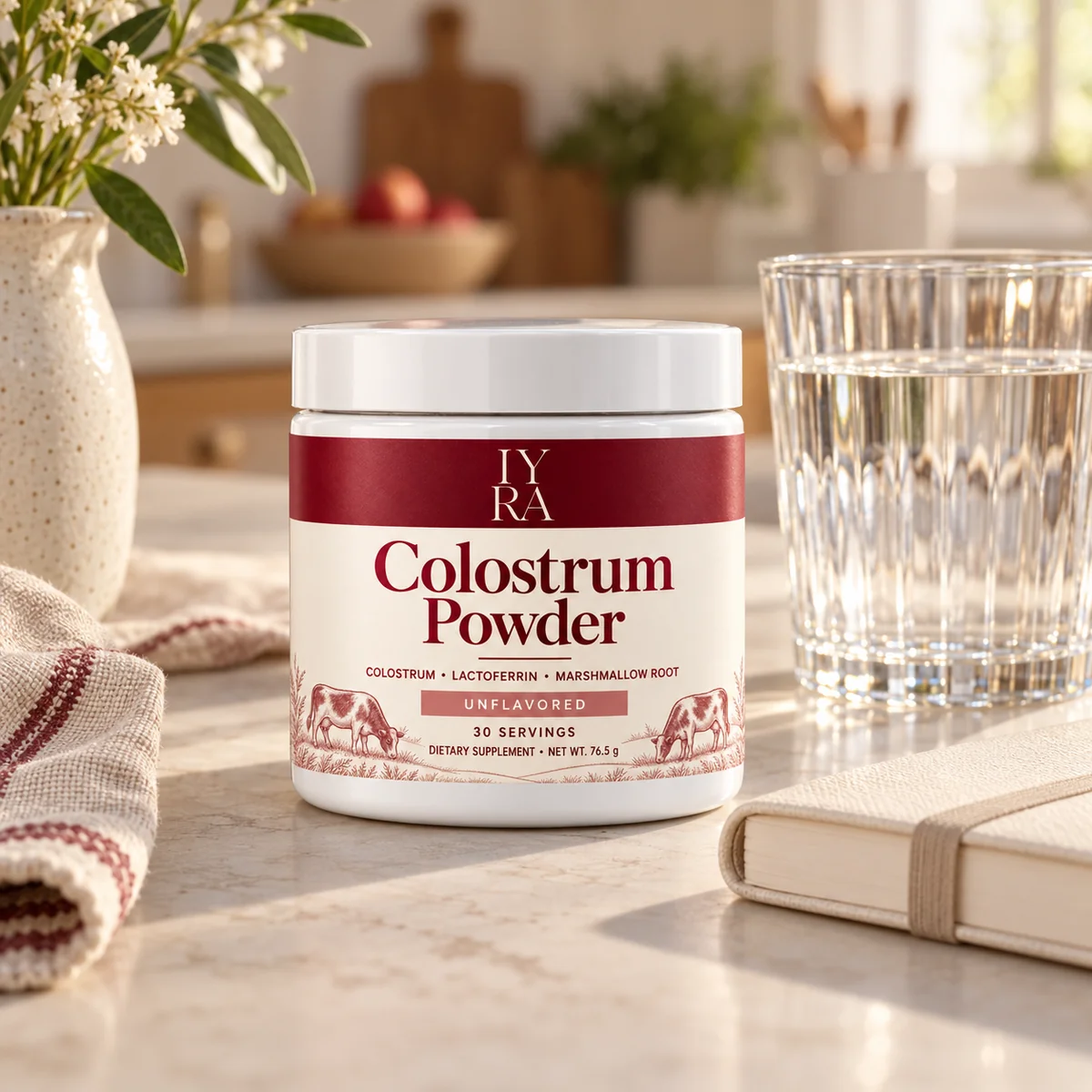
IYRA Colostrum Powder is unflavored and lists three named ingredients with visible amounts. Review the panel and serving details before deciding whether it suits your routine.
Use ingredient name, form, amount per serving and package directions as a checklist. Compare these details with your priorities to keep the choice grounded in the label.
Gas can have several causes
NIDDK says swallowed air and bacteria that break down carbohydrates the body does not digest can contribute to gas. Digestive conditions can add to it. Gas symptoms vary, and gas during or after a meal can be normal.[1]
A note about timing can help you describe symptoms to a clinician. NIDDK advises talking with a doctor when symptoms are bothersome, have a sudden onset, or come with abdominal pain, constipation, diarrhea or weight loss. Product research and care for a symptom answer different questions.[1]
What colostrum studies measured
Colostrum is the first milk produced after birth; bovine colostrum comes from cows. Human studies have examined it in settings that include exercise and IBS. Those studies measured distinct outcomes. They do not predict how someone will feel after a meal.[3][2]
A look inside the scoop
One 2.55 g scoop lists 2,000 mg colostrum, including 400 mg IgG, plus 50 mg bovine lactoferrin and 500 mg marshmallow root powder. The IgG sits within the colostrum total. The label lists root powder, not extract.
The label names three ingredients and gives the amount of each per scoop. Read those quantities beside the serving directions and compare them with your preferences.
Colostrum anchors the formula; lactoferrin and marshmallow root powder complete it. The label lists all three amounts and the serving size.
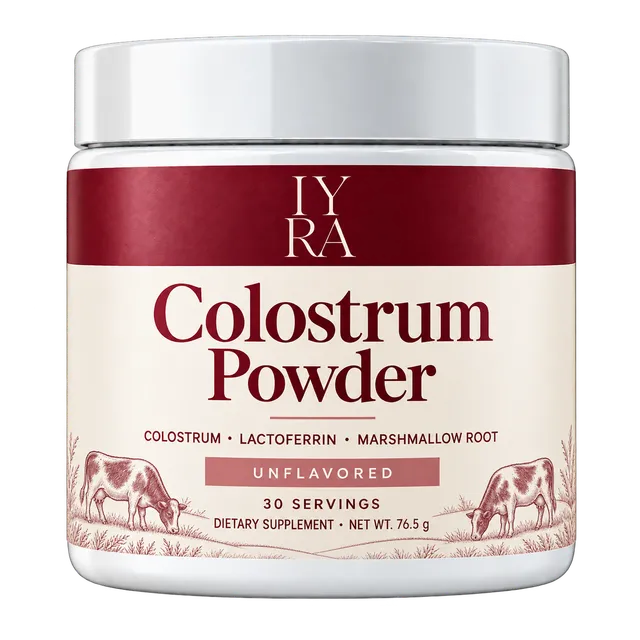
IYRA Gut-healing formula Colostrum
Colostrum. Lactoferrin. Marshmallow root. One unflavored scoop.
- Bovine colostrum
- 2,000 mgIncludes 400 mg IgG
- Bovine lactoferrin
- 50 mg
- Marshmallow root powder
- 500 mg
Per 2.55 g scoop · 30 servings
76.5 g tub · Unflavored
Contains milk.
Explore IYRA ColostrumExplore ingredients, directions and suitability on the product page.
Mix one scoop into water or a beverage
Take one included scoop (2.55 g) daily with 8 fl oz of water or a hot or cold recipe. The powder is unflavored. Check your package for the full serving directions.
IYRA’s label lists milk, so check the full package ingredient and allergen information. Choose water or a beverage that fits your preferences, then follow the package directions.
Set out a glass, measure a scoop and place the mix beside a habit you enjoy. Follow the package directions for preparation.
Common questions
Can bloating after meals have different causes?
NIDDK describes swallowed air, carbohydrate digestion and digestive conditions as possible contributors.
What does one IYRA scoop contain?
One 2.55 g scoop lists 2,000 mg colostrum including 400 mg IgG, 50 mg bovine lactoferrin, and 500 mg marshmallow root powder.
How can I prepare the unflavored powder?
Take one included scoop (2.55 g) daily with 8 fl oz of water or a hot or cold recipe. Check your package for the full serving directions.
When should I ask a clinician about gas symptoms?
NIDDK advises talking with a doctor if symptoms are bothersome, change suddenly, or come with abdominal pain, constipation, diarrhea, or weight loss.
Colostrum.
The IYRA way.
Three ingredients. One unflavored scoop. See the colostrum, lactoferrin and marshmallow root blend; check the package directions.
Contains milk. Not suitable for someone with a milk allergy.
Explore IYRA ColostrumSources & further reading
These sources cover the topic and cited research. None tests the finished IYRA formula.
- Symptoms & Causes of Gas in the Digestive Tract
The National Institute of Diabetes and Digestive and Kidney Diseases describes gas and bloating as variable; they can be normal around meals. Factors include swallowed air, carbohydrate fermentation and health conditions. The agency advises talking with a doctor about bothersome, sudden or accompanied symptoms.
- The nutriceutical bovine colostrum truncates the increase in gut permeability caused by heavy exercise in athletes
A 12-person, double-blind crossover study tested 20 g/day of bovine colostrum for 14 days before a standardized strenuous exercise challenge. Researchers measured an exercise-related urine permeability marker. The study did not measure meal-related bloating or test IYRA’s 2 g colostrum serving.
- Effect of Colostrum on the Symptoms and Mucosal Permeability in Patients with Irritable Bowel Syndrome: A Randomized Placebo-controlled Study
A small randomized, placebo-controlled study enrolled 18 adults with IBS. Participants received 15 mL per day for 4 weeks, followed by 4 weeks of observation. Between-group differences in symptoms, quality of life and endotoxin did not reach statistical significance.